Make Payments
Payment options:
Zelle, Cash App, Cash, and Venmo – ONLY AS FRIEND (Animals are not goods)
Credit Cards and PayPal
We do not accept credit cards, but a credit card payment is possible with PayPal. Monthly payments are accepted on your kitten if you wish to pay the balance in full before picking up your kitten. However, the final payment must be made in CASH when picking up your kitten.
We will add 4% to your balance if you wish to proceed with PayPal. The same for financial with PayPal.
Example:
Your balance is due $2,500, and you would like to pay with PayPal Financial. We will add 4% to $2,500. So, you will pay $2,590.
PayPal Calculator https://lili.co/paypal-fee-calculator
When you click the PayPal button to place a deposit, we already add a 4% PayPal Fee. If you need to pay OTHER amounts, click the button ( Add $0.00 to help cover the fees).
 |
 |
 |
 |
 |
 |
Royal Bengal Cattery |
Deposit
Important Instructions
Before placing a deposit, please make sure your application has been approved. Deposits are accepted only after your APPLICATION is reviewed and accepted by the breeder.
Once your deposit is submitted:
- Download and sign the Deposit Agreement
- Email the signed agreement along with a copy of your ID or driver’s license to:
This email address is being protected from spambots. You need JavaScript enabled to view it.
We require a non‑refundable deposit equal to 50% of the total kitten price in order to reserve a kitten. This applies to all kittens—whether sold as Pets, Show quality, or with Breeding Rights.
The deposit will be applied toward the final purchase price. The remaining balance is due in cash at the time of pickup or delivery. Once the deposit is received, the kitten will be marked as reserved and removed from availability. We do not accept partial or pending payments to hold a kitten.
Deposit Terms
- All deposits are non‑refundable under any circumstance once the kitten reaches 8 weeks of age.
- If the kitten has not yet reached 8 weeks, the deposit may be transferred to another available kitten or future litter.
- If the reserved kitten passes away while in our care, the deposit remains non‑refundable, but may be applied toward a future kitten while we remain in business.
- If the kitten does not have a life-threatening health issue and the Purchaser cancels the reservation, the deposit is non‑transferable.
- If the kitten requires special care and the Purchaser chooses not to wait, the deposit remains non‑refundable.
Pickup Requirements
All kittens are released from our cattery at 16 weeks of age, unless otherwise agreed in writing. Once the Purchaser has been notified that their kitten is ready, they must arrange pickup within 14 calendar days.
- If the kitten is not fully paid for, and no arrangement has been made, it may be relisted and the deposit forfeited.
- If the kitten is fully paid for and not picked up, a $25/day boarding fee will be charged starting from day 15.
- After 18 weeks, the kitten may be considered abandoned, and the Seller reserves the right to rehome or resell the kitten with no refund.
We do not accept pending, partial, or delayed payments at pickup. All remaining balances must be paid in cash only.
Delivery Terms
If the kitten is being shipped via nanny or long-distance transport, the full balance including shipping costs must be paid no later than 2 weeks prior to travel. No transport will be scheduled until full payment has cleared.
If pickup is scheduled at BWI Airport, the balance may be paid in cash at the time of pickup.
Not Ready to Purchase a Kitten?
If you're not ready to place a deposit at this time and need more time to prepare — that's absolutely okay.
You’re welcome to join our Waiting List and take your time until you're ready to commit. We'll keep you updated on upcoming litters and availability.
Click here to learn more about our Waiting List
Have Questions?
If you have any additional questions about our kittens, the deposit process, or upcoming litters, feel free to contact us anytime. We’re always happy to help you find the perfect match!
Waiting List
Joining our Royal Bngal Cattery Waiting List is the perfect option for families who are not yet ready to reserve a specific kitten, but want to secure a priority position for future litters.
How It Works
To join our Waiting List, we require a non-refundable $500 deposit, which will be applied toward the final purchase price of your kitten.
Once a litter is born, clients are contacted in the order they joined the list. You’ll be offered available kittens and have the option to:
- Select a kitten, or
- Pass and wait for the next litter — without losing your place in line.
You may skip as many litters as you wish, and your position will only move forward as families ahead of you make their selections.
Time Limits & Refund Policy
If after 12 months you haven’t found your perfect Maine Coon and choose to leave the list, you may request a partial refund of $250, as long as you have not yet reserved a specific kitten.
Once you reserve a specific kitten, your deposit becomes non-refundable and non-transferable.
Please Note
Joining the Waiting List guarantees your place in line, but does not lock in a specific price.
Our Maine Coon kitten pricing may change over time based on breeding costs, veterinary care, and overall program improvements.
When it’s your turn to choose a kitten, the current pricing in effect at that time will apply.
How to Join
- Complete our Kitten Application Form
- Once approved, submit your $500 deposit using the button below
Questions?
We’re always happy to answer your questions and help guide you through the process.
Contact us at
Let us help you find your future Maine Coon — raised with love, care, and socialization from day one.
Royal Bengal Cattery – Westminster, Maryland
Kitten Care
Download Information about Kitten Care
Introduction to a New Home
Here are some general information's to help you to introduce your new cat or kitten to the new home in the best possible way. It is important for you to plan ahead a few things, before your new family member will come in.
Before you bring your new cat or kitten home you should have ready:
1. The same type of food the kitten is used to eat, in order not to upset his/her stomach with a sudden change of diet.
If you do choose to feed your kitten different food, do expect a short period of loose stools while the kitten’s digestive tract becomes familiar with the new food. Your kitten will be used to being handled and being in a home environment with children but do expect your kitten to be initially cautious or timid in his/her new environment. Given time and space, your kitten’s natural curiosity should eventually lead him/her to explore your new home and become comfortable. This transition time period is different for every kitten.
We feed our kitties with ROYAL CANIN FELINE HEALTH NUTRITION Kitten dry cat food and for adult cats we use ROYAL CANIN BENGAL ADULT DRY CAT FOOD

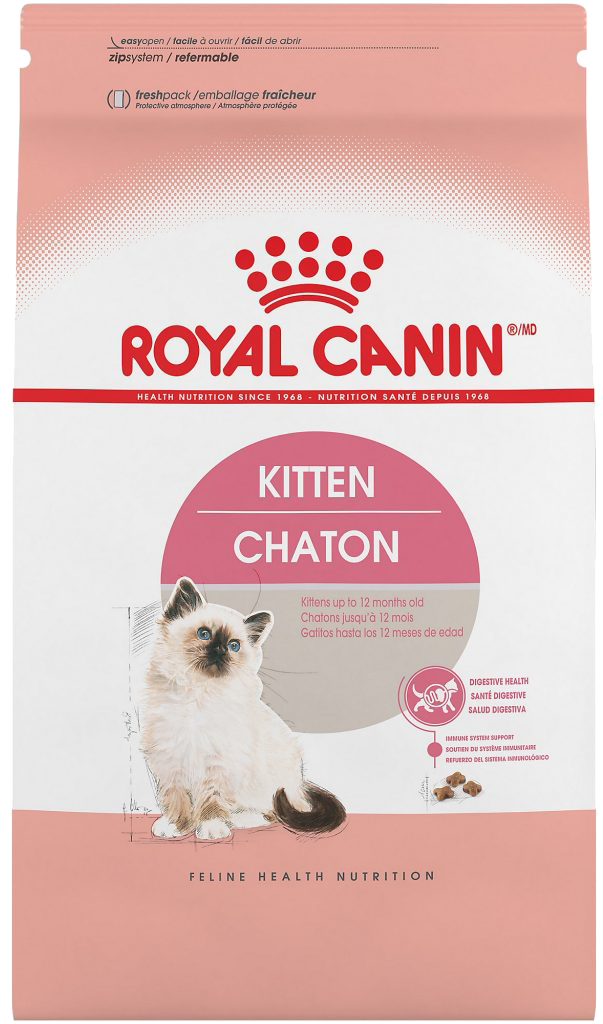


We will provide you with a Kitten Starter Pack containing enough food for the first 2 –3 days. You are welcome to contact us for any tips on nutrition.
2. Have a clean litter box ready. Our kittens are litter trained and are used to Tidy Cats Lightweight 4-in-1 Strength Clumping Cat Litter.
When you bring your new cat or kitten home show your kitten immediately where his/her litter box. If you have more them one cat or live in a big house with multiple floors, please consider putting a box on each floor.
A clean litter box is key because your kitten will avoid using a messy, smelly one. Wash her pan once a week with soap and water. It is best not to use strong disinfectants (containing ammonia); they aren’t necessary and may offend your kitten’s sensitive nose. Use a mild disinfectant such as bleach and water on the litter box about once a month, putting the box outdoors to dry in the fresh air, if possible. Always wash your hands thoroughly after handling.
IMPORTANT: Humans may contract an organism called toxoplasma from cat feces while cleaning out the litter box. Wear gloves while changing your kitten’s litter and always wash your hands afterwards. Pregnant women should be especially cautious and consider asking another family member to clean the litter box. This is because toxoplasmosis can cause severe birth defects. We recommend that a non-pregnant family member clean and change the litter box.
3. Have suitable bowls for food and water ready.
You'll want to wash her food and water bowls daily to keep things fresh. Plenty of clean, fresh water on hand is key for a cat/kitten too.
4. VERY IMPORTANT!! Set aside a quiet and preferably small room (if possible with a soft bed or couch) for your cat/kitten. You must let your new pet stay in this room until he/she becomes comfortable with you and is eating well.
This helps the new cat/kitten to calmly explore the new place, as well as get used to you. It is important to give time, and to talk sweetly and act very gently towards your new pet. If he/she wants to stay hidden, leave him/her doing that, don't force him/her out or you might either get scratched or scare the kitten.
After the cat/kitten starts to be more comfortable with you and he/she is eating well, you can let the door open in order for him/her to start exploring the new environment.
If the cat/kitten is crying after you leave the room and runs towards you when you are entering that room, he/she is definitely ready to explore the new home.
5. If you have other pets, either cats and dogs, do not let them with your new cat/kitten immediately, as this could get the animals hurt as well as compromise your relationship with your new pet.
While the cat/kitten is settling in the new room, let your other pets sniff around the door and on you to get used to the smell of your new pet. Do not force the animals together, but introduce them slowly and monitor them. For the first period, do not leave your new cat/kitten alone with your other pets, especially if you are outside the house. Accidents can and will happen. You can leave them together after you are 100% sure that they will get along.
6. When you are entering the room, place the carrier on the floor and let your cat/kitten come out on his/her own. Be calm, quiet and relaxed. You can use a feather teaser-toy to encourage your new pet to come out of the carrier.
7. Make sure that your new cat/kitten knows exactly where the litter tray and food is. After exploring part of the house, at the beginning, he/she might get lost so you will have to help him/her to find the litter tray and food.
8. Sit or lie on the floor at your kitten's level to play and socialize. Do not do quick movements or he/she might get scared.
9. You might have to place your new pet several times in the litter after arrival. Make sure he/she is using it.
10. Check that your cat/kitten is eating and drinking regularly after the first few days.
11. Do not introduce too many people at once to your kitten/cat. Make sure he/she is first getting comfortable with you and then slowly introduce new family members.
12. Do not let your kitten/cat run the full house immediately. Also, do not let him/her outside (even on a harness) until the cat/kitten is comfortable with you.
13. Make sure to remove any possible hazard in order to avoid accidents with your new cat/kitten. Remove also small objects or anything that the cat might get and play with. Remember, it is never the cat/kitten's fault, it is yours!
14. Bengal cats and kittens are very smart and active, so make sure to provide them with different toys and ample space to play. They must feel stimulated and not bored.
If you follow these simple rules introducing the new cat/kitten to your home will go smoothly and will be a good experience for you.
Enjoy your new bengal!!!
Vaccines Kittens Need
DRCC/FVRCP Vaccination:
When you pick up your Bengal kitten it will have already received the first round of core vaccinations and deworming medication. Kittens are correctly vaccinated at 8 weeks and at 12 weeks of age. The first series of shots a kitten will get is a DRCC/FVRCP vaccination against Feline Distemper (Panleukopenia), Rhinotracheitis, and Calici virus. These vaccines help protect against upper respiratory diseases, herpes and fatal viruses. Annual revaccination with a single dose is recommended.
Keep in mind that Rabies vaccine cannot be administered until 16 weeks of age and is the new owner's responsibility. Kittens also need to be with their mothers and litter mates for a minimum of 12 weeks for proper health and social development. Kittens should never be permitted to leave a Cattery prior to 12 weeks of age. If a Cattery is selling at earlier ages, such as 8, 9, 10, even 11 weeks of age, they are not properly vaccinating or giving the Kittens their best chance at a happy, healthy, long life. At Royal Bengal Cattery, we vaccinate at 8 and 12 weeks of age. If a Cattery does not follow these recommendations and guide lines, so they cannot guarantee the health of the kitten.
What Vaccines Do:
A vaccination is a small virus which is injected into a kitten to help build a response that builds the kitten's immunity against a particular disease. The virus injected has been modified so the kitten will not get sick from the introduced virus, but is effective in building a resistance.
A vaccination should help create antibodies that help a kitten fight disease and protect him as long as the antibodies are in the cat's system.
Rabies Vaccination:
Keep in mind that Rabies vaccine cannot be administered until 16 weeks of age and is the new owner's responsibility. Kittens also need to be with their mothers and litter mates for a minimum of 12 weeks for proper health and social development. Kittens should never be permitted to leave a Cattery prior to 12 weeks of age. If a Cattery is selling at earlier ages, such as 8, 9, 10, even 11 weeks of age, they are not properly vaccinating or giving the Kittens their best chance at a happy, healthy, long life. At Royal Bengal Cattery, we vaccinate at 8 and 12 weeks of age. If a Cattery does not follow these recommendations and guide lines, so they can not guarantee the health of the kitten.
So, what is rabies? Well, rabies is a virus that is called a bullet-shaped Rhabdovirus that can enter the body by saliva of an animal that is rabid. Usually this is transmitted to another animal by biting. After the virus has entered the body it will travel to the central nervous system via the spinal cord and then finally attacks the brain of the victim. The main reason why rabies is so much dreaded and deadly is because once it gets into the central nervous system, the immune system simply cannot respond to this attack from the invading virus and death is unavoidable. Something you surely don’t want to see happen to your Bengal kitten.
Right now there currently are 27 states along with the District of Columbia that requires that your Bengal kitten and all cats receive rabies vaccinations. Even if your Bengal kitten is going to be kept indoors. The vaccine will help protect your kitten from people and other animals they might come in contact with, so it’s vital that your kitten receives their rabies vaccination. Not only will it protect your kitten but should you not have proof that your kitten is vaccinated and they scratch someone, you may be at a high risk of having your Bengal cat taken away from you and euthanized in some states! So, it’s really not worth the risk.
Vaccines Kittens Do Not Need:
If a kitten will be an indoor-only pet, a FEL/FIV (feline leukemia and feline immunodeficiency virus) vaccine is usually not necessary. However, it is
recommended that your kitten get tested for FEL/FIV if not much information is know about the kitten and his parents. The FEL vaccine can cause vaccine-related sarcomas from the killed viruses in the vaccine. The FIV's efficacy is questionable and can cause tests to show a false positive.
The Chlamydia vaccine is not recommended for cats at little to no risk of contracting the disease. This vaccine has a high rate of cat illness symptoms and should only be used based upon the prevalence of the condition and the breeding conditions.
FIP (Feline Infectious Peritonitis) is a viral disease that is almost always fatal. The intranasal vaccine that has been created has not proven effective in preventing feline FIP. Vaccines are only recommended for high-risk cats.
Other immunizations kittens don't need include the dermatophytosis (ringworm) vaccine, yellow fever immunization, the Bordetella vaccine, and the giardia vaccine; they are not recommended by most veterinarians. Many of the vaccines that are unnecessary have serious side effects or are ineffective and cannot be treated with cat meds.
The American Veterinary Medical Association and the American Association of Feline Practitioners advise that kittens with lower risks of disease exposure may not need booster shots on an annual basis for most illnesses. However, recommendations vary by breed, potential of exposure, the health of a cat, and the geographic location in which the kitten lives. Talk with your veterinarian to determine which vaccinations are most appropriate for your kitten.
Spaying/Neutering (Sterilization):
You are required to have your kitten sterilized by 6 months the latest and have the vet paperwork of the procedure mailed to me for my records to comply with TICA's standards, as per your contract. However, I highly recommend doing this as early as possible, some Vets will do this by 4 months. You do not want your kitten anywhere near sexual maturation and some cats can mature before 6 months. Imagine what you were like all hormonally-charged during your puberty, and then imagine your kitten going through that! Most behavior problems are sexually driven!
There are numerous reasons you should spay or neuter your cat! Let’s talk about health reasons first…
Female cats that are spayed CAN’T get uterine cancers; their risk of mammary (breast) cancer is reduced by 25%; and they are less prone to urinary tract infections and hormonal changes.
Male cats that are neutered CAN’T get testicular cancer, and they live 40% longer than their unneutered counterparts.1 Unneutered male cats respond to the “call of the wild” and their desire to wander is fierce. Unneutered male cats may become aggressive toward other cats, increasing their risk of injury and becoming infected with feline leukemia and/or feline immunodeficiency virus. And don’t forget: unneutered male cats tend to spray urine, which STINKS!